pre workout
Pre-Workout Meal Oatmeal: The Athlete's Guide to Timing, Portions, and Recipes
Oatmeal is one of the best pre-workout meals. Here's the timing window, the right portion by body weight, the type of oats to use, and athlete-tested recipes.
Why oatmeal is a top pre-workout meal
Three things make oatmeal an excellent pre-workout meal: the carbohydrate profile, the beta-glucan fiber, and the timing tolerance. Rolled oats are roughly 60% complex carbohydrates by weight, which is the macronutrient muscles use first during moderate-to-high intensity exercise. The American College of Sports Medicine's joint position stand on nutrition and athletic performance recommends 1-4 grams of carbohydrate per kilogram of body weight 1-4 hours before exercise[ACSM-2016], and a standard cup of cooked oats delivers ~28 grams in a digestible form.
The second reason is beta-glucan, a soluble fiber that slows gastric emptying. The 2020 Nutrition Reviews paper by Tosh and Bordenave confirmed that beta-glucan releases glucose into the bloodstream over 1-2 hours rather than spiking and crashing[Beta-Glucan]. That steady release is exactly what you want during a soccer practice, a long run, or a lift session that runs past an hour.
The third reason is digestibility. Oatmeal is one of the few pre-workout meals that works across the 30-minute to 3-hour timing window. Higher-fat or higher-protein meals need at least 2-3 hours to clear the stomach. Oatmeal at 1-2 hours hits the sweet spot.
Pre-workout oatmeal timing: how long before you train
The right timing depends on the size of the bowl and the intensity of the workout:
- 3 hours before: a full meal: 1 cup cooked oats, 1/2 cup Greek yogurt, fruit, nuts. Gives carbohydrates time to convert to glycogen and clears the stomach before any high-intensity work.
- 1-2 hours before: the sweet spot for most athletes. 1/2 to 3/4 cup cooked rolled oats with banana and a tablespoon of nut butter. This is the timing window the International Society of Sports Nutrition position stand on nutrient timing endorses for endurance work[ISSN-Timing].
- 30-60 minutes before: a small portion: 1/4 to 1/3 cup cooked rolled oats with a teaspoon of honey, no fat, no fiber-bomb toppings. Light enough not to sit heavy.
- Under 30 minutes: skip oatmeal. Reach for a banana, a date, or a piece of toast with honey instead.
For morning training, overnight oats are the cleanest answer because they hydrate overnight and digest faster than freshly cooked oats. See our athlete overnight oats recipe for the make-ahead version.
Rolled, steel-cut, quick, or overnight: which type for pre-workout
Not all oats fuel a workout the same way. The difference is how quickly the body breaks them down:
| Oat type | Pre-workout fit | Why |
|---|---|---|
| Rolled oats | Best | Steady release, 1-2 hour timing window |
| Overnight oats | Best (morning) | Pre-hydrated, easiest on the stomach |
| Quick oats | OK | Faster digestion, less sustained energy |
| Steel-cut | Avoid pre-workout | High fiber, 30+ min cook time, GI distress risk |
| Instant flavored | Avoid | Added sugar spikes and crashes |
For most athletes, plain rolled oats win. Steel-cut delivers more fiber than you need within an hour of training and can cause cramping during high-intensity work. Instant packets crash energy from the sugar load.
How much oatmeal: portion math by body weight
Pre-workout carbohydrate intake should scale with body weight and workout duration. ACSM's 2016 position stand specifies 1-4 grams of carbohydrate per kilogram of body weight 1-4 hours before exercise[ACSM-2016]. For a 1-2 hour pre-workout meal, 1-2 g/kg is the target range. Here is the oatmeal math:
| Body weight | Carbs target (1-2 g/kg) | Cooked oats | Add to hit target |
|---|---|---|---|
| 80 lb (36 kg) | 36-72 g | 1/2 cup (28 g) | 1 banana + 1 tbsp honey |
| 120 lb (54 kg) | 54-108 g | 3/4 cup (42 g) | 1 banana + 1/2 cup berries |
| 170 lb (77 kg) | 77-154 g | 1 cup (56 g) | 1 banana + 1/2 cup yogurt + honey |
| 220 lb (100 kg) | 100-200 g | 1.5 cups (84 g) | Banana + yogurt + 2 tbsp peanut butter |
Note: cooked rolled oats are roughly 28 grams of carbohydrate per 1/2 cup per USDA FoodData Central[USDA-FoodData]. Toppings carry the rest of the carb load for larger athletes, that's the role of the banana, honey, or fruit.
What to add to oatmeal: the 2:1 carb-to-protein build
Plain oats lack protein. For a complete pre-workout meal at 1-2 hours out, layer in 15-20 grams of protein at roughly a 2:1 to 3:1 carb-to-protein ratio per ISSN's nutrient timing position stand[ISSN-Timing]. The cleanest combinations:
- Greek yogurt (1/2 cup): +12 g protein, low fat, easy on the stomach
- 2 egg whites or 1 whole egg: +6-7 g protein, classic athlete combo
- 1 scoop whey protein: +25 g protein (adults 18+ only, see kid section below)
- 1 tablespoon peanut butter or almond butter: +4 g protein + healthy fats
- 1 tablespoon hemp hearts or chia seeds: +3-5 g protein + omega-3s
Fruit toppings add fast-acting carbohydrates that complement the slow release of the oats. Bananas are the classic pairing, they also deliver potassium that offsets sodium loss during sweaty workouts.
Common pre-workout oatmeal mistakes
- Too much fiber. Adding chia, flax, raspberries, AND steel-cut oats stacks soluble fiber past what the gut can clear in an hour. Cramps and bathroom sprints follow. Cap fiber additions at one source for pre-workout.
- Too late. A full bowl of oatmeal 30 minutes before a workout sits in the stomach when blood is being shunted to working muscle. The result is sluggishness and reflux.
- Too much fat. A heaping spoon of peanut butter plus full-fat yogurt plus avocado slows digestion past the timing window. One fat source is enough.
- Sugary instant packets. Brown-sugar-and-maple flavored packets spike blood sugar and crash before the workout even starts. Stick to plain rolled oats with real fruit.
- Skipping protein entirely. Carbs alone leave you hungry and protein synthesis lagging. The ISSN protein position stand calls for 0.4-0.55 g/kg per meal for athletes[ISSN-Protein], at least one protein source belongs in the bowl.
Pre-workout oatmeal for young athletes 8 and up
Oatmeal is one of the safest pre-workout meals for young athletes, high in complex carbohydrates, naturally low in saturated fat, and within the dietary patterns the AAP's Bright Futures Sports Nutrition guidance endorses for active children[AAP-Bright-Futures]. Some specifics for the 8-17 age band:
- Skip protein powder. Children under 13 should hit protein targets with whole foods (Greek yogurt, milk, eggs, nut butter), not powder. Per AAP guidance, supplement marketing aimed at youth is not appropriate without medical oversight[AAP-Promotion].
- Smaller portions. A 10-year-old at 80 lb needs about 1/2 cup cooked oats with banana, not a full adult bowl. Use the portion table above.
- Hydrate first.Kids show up to morning practice dehydrated more often than adults. Per NATA's position statement on fluid replacement, 8-16 oz of water with the meal is the floor[NATA-Fluid]. Our hydration tracker calculates the exact daily target by body weight and day type.
- No caffeine add-ins.Cocoa nibs and coffee-grounds toppings are trendy in adult pre-workout content. AAP's clinical report on caffeinated products explicitly recommends against routine caffeine for children and adolescents[AAP-Sports-Nutrition].
Pre-workout oatmeal recipes
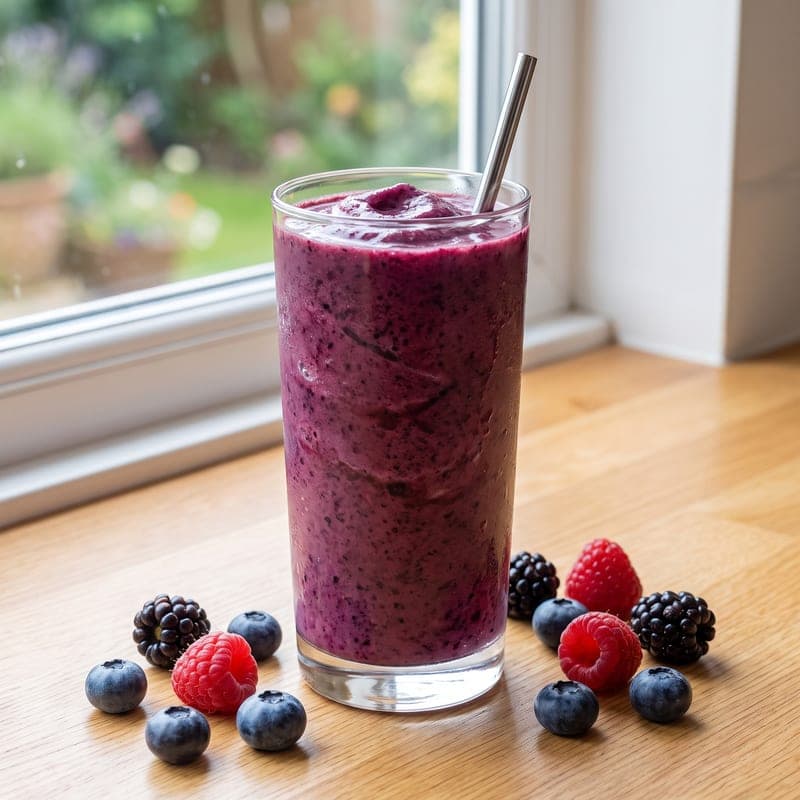
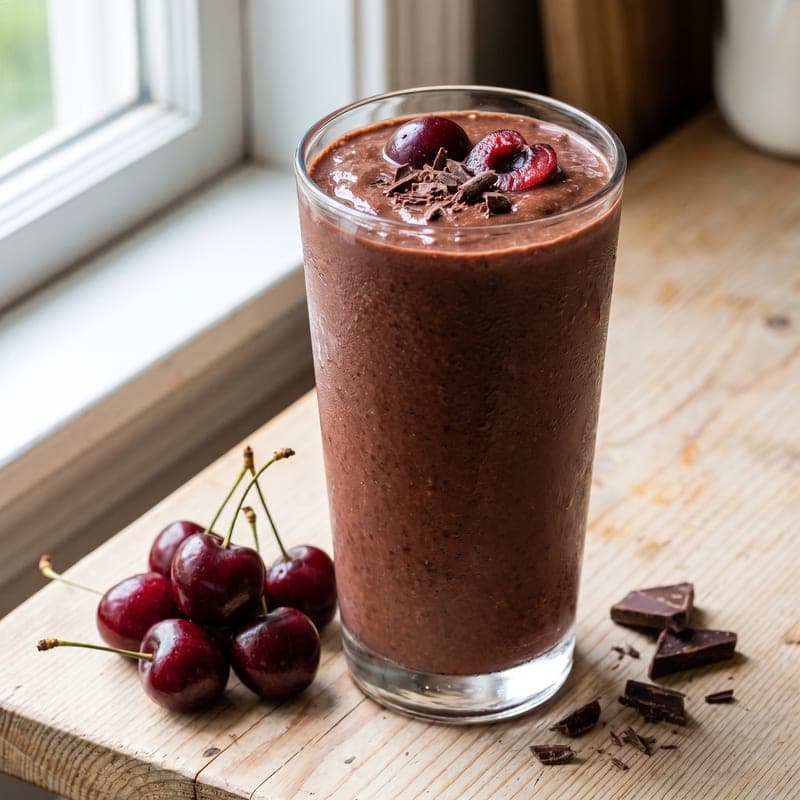
We have three oatmeal-based pre-workout recipes ready in the recipe library. Each one scales with the portion math above and links to the planner so you can drop it into a training day with one tap:
- Athlete overnight oats: make-ahead version for morning training. Rolled oats, Greek yogurt, banana, chia, honey.
- Berry oat fuel smoothie: same nutrients, blender format. Drinkable, faster pre-practice.
- Chocolate cherry oats: tart cherry + cocoa angle. Works as a pre-workout when light, recovery when loaded.
Hydration with your pre-workout meal
Oatmeal absorbs water as it cooks, which means it can pull fluid from the gut as you digest it. Pair the bowl with at least 8-16 oz of water at the meal and another 8 oz in the 30 minutes before training. NATA's 2017 fluid replacement statement recommends athletes start training in a euhydrated state, which translates to clear or light-yellow urine 2 hours before exercise[NATA-Fluid].
The FuelMyAthlete hydration tracker calculates daily targets by age, body weight, and day type using AAP pediatric formulas for children and ACSM body-weight scaling for adults. It also adjusts for hot weather, which is the single biggest reason pre-workout hydration goes sideways in the summer.
Recipes that fit
All recipes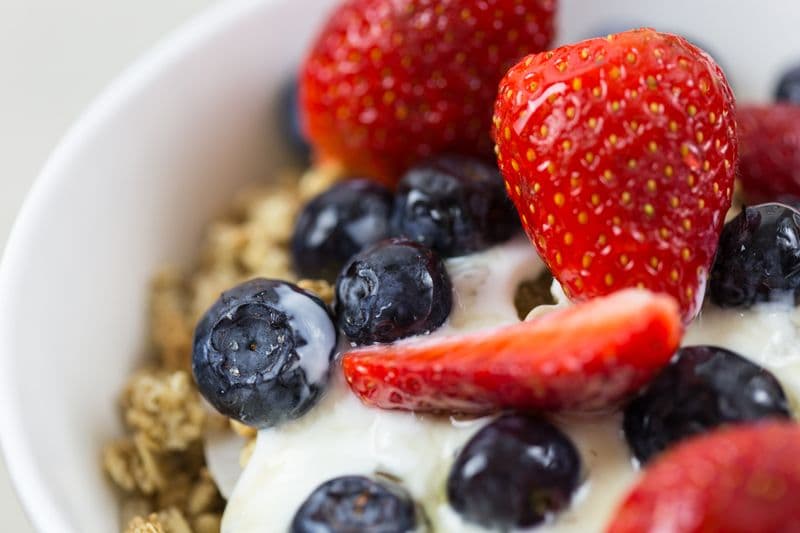
Frequently asked questions
Yes. Rolled oats deliver slow-release complex carbohydrates and beta-glucan fiber that fuel exercise without a sugar crash. Eat 1/2 to 1 cup of cooked oats 1-2 hours before training with 15-20 grams of protein for a complete pre-workout meal.
Keep reading
Is Oatmeal a Good Pre-Workout Meal? A Sports Nutrition Breakdown
Yes, oatmeal is one of the best pre-workout meals. Here's the science (beta-glucan, complex carbs), the timing window, the right oat type, and when to skip it.
Read guide
What Is a Good Pre-Workout Meal? Timing, Foods, and Portions by Body Weight
A good pre-workout meal pairs complex carbs and lean protein 1-3 hours before training. Here's the timing matrix, the food list, portions by body weight, and recipes.
Read guide
AM Pre-Workout Meal: What to Eat Before a Morning Workout
What to eat before a morning workout. Timing windows from 5 minutes to 2 hours pre-training, the 30-second AM snack, fasted-training rules for adults and kids.
Read guide
The Best Pre-Workout Meal: 10 Athlete-Tested Options Ranked
The best pre-workout meal pairs complex carbs with lean protein in a 3:1 ratio, 1-3 hours before training. Here are the 10 best options ranked, with portions by body weight.
Read guide
Sources
- [ACSM-2016]Thomas DT, Erdman KA, Burke LM. American College of Sports Medicine Joint Position Statement: Nutrition and Athletic Performance. Medicine & Science in Sports & Exercise, 2016.
- [ISSN-Timing]Kerksick CM, Arent S, Schoenfeld BJ, et al.. International Society of Sports Nutrition Position Stand: Nutrient Timing. Journal of the International Society of Sports Nutrition, 2017.
- [ISSN-Protein]Jäger R, Kerksick CM, Campbell BI, et al.. International Society of Sports Nutrition Position Stand: Protein and Exercise. Journal of the International Society of Sports Nutrition, 2017.
- [Beta-Glucan]Tosh SM, Bordenave N. Emerging Science on Benefits of Whole Grain Oat and Barley and Their Soluble Dietary Fibres. Nutrition Reviews, 2020.
- [USDA-FoodData]U.S. Department of Agriculture, Agricultural Research Service. FoodData Central. USDA, 2024.
- [AAP-Bright-Futures]American Academy of Pediatrics. Bright Futures Nutrition (3rd ed.): Sports Nutrition. AAP, 2020.
- [AAP-Promotion]American Academy of Pediatrics, Council on Sports Medicine and Fitness. Promotion of Healthy Weight-Control Practices in Young Athletes. Pediatrics, 2017.
- [AAP-Sports-Nutrition]American Academy of Pediatrics, Committee on Nutrition and Council on Sports Medicine and Fitness. Sports Drinks and Energy Drinks for Children and Adolescents: Are They Appropriate?. Pediatrics, 2011.
- [NATA-Fluid]McDermott BP, Anderson SA, Armstrong LE, et al.. National Athletic Trainers' Association Position Statement: Fluid Replacement for the Physically Active. Journal of Athletic Training, 2017.
- [IJMS-Oats]Singh R, De S, Belkheir A. Avenanthramides in Oats: Bioactivity, Anti-Inflammatory and Antioxidant Properties. International Journal of Molecular Sciences, 2017.
FuelMyAthlete provides general guidance based on published sources from the American Academy of Pediatrics (AAP), National Athletic Trainers' Association (NATA), and American College of Sports Medicine (ACSM). This is not medical advice. For personalized sports nutrition plans, especially for children, consult a registered sports dietitian or pediatrician. See our editorial methodology.